Saturday, March 1, 2014

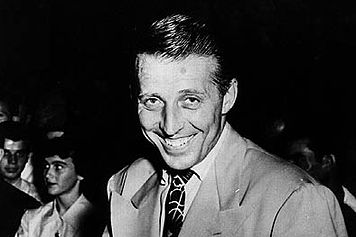
The Controversial Stan Kenton, Part III: The Gospel According To Stan

"With high regard and respect for each other's individuality, the ingredients in the variety of a group of personalities can make a music wide in scope, from tender, soft sounds to screaming, crashing dissonance. This is an orchestra!"

Stan Kenton, "Prologue: This Is An Orchestra"


Now that we've had a chance to talk about Stan Kenton from a purely biographical standpoint, let's take a long, hard look at the music that he created.

It's obvious that we can't do a full musical dichotomy of Kenton's lengthy career in one blog post alone. What we can do is establish the nature of his art: the key musical concepts, the various emotional devices he likes to fall back on, the way he utilizes the various solo voices he had access to. This may seem like a daunting task at first, but Kenton actually made our life a lot easier by essentially codifying his message in a single recording.

In 1952, Kenton recorded and released a series of tracks that came to be compiled on a single album: "New Concepts of Artistry in Rhythm." An in-depth look at the entire content of this album is for another time and another place. What is relevant for this discussion is the album's opening salvo, the 10-minute "Prologue: This Is An Orchestra," composed in segments by Kenton and Johnny Richards. Kenton also serves as narrator, expounding upon his musical mission while guiding the listener through an introduction of every member of his ensemble, from those now in the pantheon of jazz royalty (saxophonist Lee Konitz, trumpeter Maynard Ferguson, trombonist Frank Rosolino) to those who are mere footnotes in the ongoing musical odyssey (baritonist Bob Gioga, trombonist Keith Moon, trumpeter Don Dennis).

Looked at purely in terms of its musical merits, the piece doesn't exactly work as well as it could. There is an overall disjointed feel as the band jumps back and forth between different sounds and styles; this should come as no surprise when one reflects upon the way the piece was composed. The band's strongest soloists typically get the longest moments in the spotlight, but one wishes that even these showcases could be allowed a little more time to develop. To focus on these issues, however, is to miss the point of what Kenton was trying to accomplish with this work. This was meant to be not a masterwork of music, but rather a mission statement, an elucidation of the band's greater purpose.

The piece starts out, appropriately enough, with a dissonant, brass-heavy blast. Kenton announces "This is an orchestra!" (As if the band hasn't already made that abundantly clear.) Some dissonant, ruminating accompaniment underlies Kenton's first monologue, filled to the brim with purple prose, some self-congratulatory back-patting, and a couple statements of the obvious. Kenton concludes: "This is a cross-section view of this orchestra," accompanied by another, slightly more subdued brass blast. 55 seconds in, we're finally off to the races.

The band's intro begins with the rhythm section, specifically bassist Don Bagley, who opens things up with a double-time bass line before the band segues into a brief Sal Salvador guitar solo. Yet another brass blast sends drummer Stan Levey off into an unaccompanied double-time solo, followed by another climactic, dissonant swell. Kenton's words do a decent (if overly verbose) job of stating the roles of his rhythm section: the bass provides the foundation, the guitar serves as a melodic voice, the drums keep the beat churning steadily ahead. Despite the many musicians who would occupy these seats over the years, their roles remained essentially the same; it would be up to the individuals themselves to see if they could transcend these base job descriptions. Some would do so better than others.

At the 1:52 mark, Kenton gives a brief mention to trombonist/composer Bill Russo. This seemingly passing mention may seem odd compared to Russo's true value to the band; in my opinion, no composer better captured the Kenton spirit than Russo, save perhaps Pete Rugolo. Upon closer observation, however, it makes more sense. This piece is only intended to display the performance skills of the band members, and Russo was never a particularly skilled improviser. Even more cursory is Kenton's mention of "a young guy, Keith Moon." Moon apparently retired from touring in the mid-1950s due to familial commitment, a resume that's not exactly comparable with The Who drummer of the same name.

The piece's first prominent improviser introduces himself around 2:20, trombonist Frank Rosolino. His brief spotlight is typical Rosolino: boisterous, exciting, powerful. It seems the band can't help itself but swing behind him, with this sense of swing continuing through the brief ensemble portion that follows him. Following this is a seemingly passing mention of trumpeters Rueben McFall and Don Dennis, described as "young musicians...that are just getting started." Kenton would end up using a lot of these kinds of musicians toward the end of his career. The two play a simple duet underneath the introduction of lead altoist, Vinnie Dean, who displays a warm, pretty sound in what turns out to be a rare quiet moment for the band. Dean's approach is almost perfectly indicative of what Kenton sought out in his saxophonists: a soft, mild, benign presence to counter-balance (or perhaps to not get in the way of) the atomic brass section.

I'm not sure I agree with Kenton that an ominous trombone blast is the best way to introduce the lithe tenor of Bill Holman, but that's what he gives us at 3:40. It's also unfortunate that Kenton's bloviated monologue covers up most of Holman's soloing. I've always believed that had his writing not become the main selling point of his musicianship, Holman would have become one of the top tenormen on the West Coast scene. Thankfully, Kenton gets out of the way in time for Richie Kamuca (another soft-edged saxophonist) to take a brief solo of his own. Between Kamuca and other notable Kenton tenor soloists over the years, you could more or less recreate the Woody Herman Four Brothers sound if you wanted to.

Although Conte Candoli is introduced by a more typically brash fanfare from the brass, his brief solo at 4:36 serves as a great reminder of the inherent warmth and beauty of his trumpet playing. This tender moment is interrupted by yet another ominous rumble, albeit a slightly more subdued one from before. Kenton's next monologue discusses the importance of having musicians who "are in constant study...[who] are intent on achieving greater heights." It turns out that in this case he's referring to altoist Lee Konitz, who plays a brief yet typically brainy solo. Thankfully, he's not cut off in the same way that Kamuca was earlier. Kenton briefly waxes personal about baritonist Bob Gioga, who had been with his bands since the very beginning. Gioga plays a written solo with an almost classical approach.

This is followed up at 6:38 by another written solo, this time performed by someone on the opposite end of the range spectrum: lead trumpeter Buddy Childers. Although Childers did not possess the stratospheric capabilities of other Kenton brassmen, he has no problem showcasing his big, clear sound and effortless facility from top to bottom. The writing underneath him, while dissonant, ebbs and flows with a subtlety not seen in some of Kenton's later efforts. Bass trombonist George Roberts and Kenton have some brief repartee, with Roberts initially defying Kenton's orders to display his bottom register. After discussing the importance of having a "1st trombone [who] can take black notes from dead paper and bring wonderful life to them" (accompanied by some appropriately pecky saxophone writing), Kenton introduces Bob Burgess, who plays a surprisingly docile solo over some impressionist-sounding underpinnings from the saxophones. Burgess' warm sound was no doubt influenced by one of Kenton's first lead bone men, Kai Winding; these traits would continue to be seen in Burgess' successors.

We're down to the final musician, and according to Kenton, this gentleman is "capable of stirring great feelings of fire." The ensuing high-note blast at 8:06 should come as no surprise; it's trumpeter Maynard Ferguson, who gets a solo that, at first, showcases his underrated skills as an improviser. It doesn't take long, however, for Ferguson to fall back on his trademark range. After he finishes his improvisation, he trades some more high note blasts with the rest of the band, who are by this point playing at a fevered intensity. Kenton always had a predilection for screaming trumpet players, but Ferguson's skills were on a completely different level than anyone else at that point. Ferguson quickly became Kenton's favorite soloist, and his over-the-top, energetic approach to playing (not to mention his sheer, undiluted power) came to be the golden standard that Kenton looked for in all of his future trumpet players.

After an abrupt break in the music, and with a somewhat melancholy piano accompaniment, Kenton introduces himself at 8:50 in a disarmingly humble, slightly self-effacing way. It's a nice change of pace compared to the rest of his pompous ramblings; it's almost like he's trying to make up for how much he ran his mouth through the rest of the piece. His monologue concludes with the quoted snippet at the top of the page, with the band swelling and building underneath. Kenton is forced to continuously raise his voice, finally reaching an all-out yell at his final pronouncement of "this is an orchestra!" The piece concludes with one final, climactic blast, with Ferguson screaming over the top of the whole thing and Levey pounding on his tom-toms as if they were tympani.

The piece has finally concluded, having given us a full account of not only the musicians Kenton had at his disposal, but also their various roles and purposes within the ensemble. The saxophonists are supposed to be cool, level-headed, complimentary. The trombonists are the meat and potatoes, providing warmth, depth, and force when necessary. The trumpets are the fire breathers, where the only real rule is "the louder and higher, the better." The rhythm section keeps the time and lays the foundation on which the real important stuff (read: the brass) is built. All of this has been stated clearly, pompously and perhaps even condescendingly. When all's said and done, we finally have a portrait of how music is supposed to be through the eyes of Stan Kenton.

This post is part of a series on the life and music of Stan Kenton. In the next post, I will be discussing the key criticism of Kenton's music, namely its perceived lack of swing, and whether or not that is a fair assessment.

Thursday, February 27, 2014

The Controversial Stan Kenton, Part II: Introduction Continued

Let's pick up where we left off in the life of Stan Kenton. The year: 1950. After spending a year away from the music world, Kenton was itching to get back in the saddle. Much like the Blues Brothers 30 years later, Kenton believed himself to be on a mission from God, and now was the time to get the band back together.

Unlike Jake and Elwood, Kenton's ambitions involved much more than just raising $5,000 to save an orphanage. He was setting out to change the world of jazz as we know it. He even had a fancy new name for it: "Progressive Jazz." He had an equally fancy name for his new, retooled band: the "Innovations In Modern Music Orchestra." No doubt about it - this was no longer the advanced, modernistic dance band of the mid 1940s. This was a band that was loudly declaring its place at the forefront of not just modern jazz, but modern music in general.

The most noticeable change in this band was its personnel. In addition to the standard big band configuration, the Innovations Orchestra contained a 16 piece string section, French horns, and an auxiliary woodwind section in addition to the standard saxophones, adding up to form a 39-piece behemoth. The band provided all sorts of new arranging challenges, which were accepted not only by Kenton veteran Pete Rugolo, but also younger arrangers such as Bill Russo, Shorty Rogers, Bill Holman and Bob Graettinger. In addition to the skilled staff writers, this band featured a number of Kenton's most notable soloists, including trumpeters Rogers and Maynard Ferguson, saxophonists Art Pepper, Bud Shank and Bob Cooper, guitarist Laurindo Almeida, and drummer Shelly Manne. Unsurprisingly, things proved to be hideously unviable from a monetary standpoint (Kenton ended up nearly $125,000 in debt a mere 4 months in), and Kenton abandoned the project by the start of 1951 in favor of a smaller (by comparison) 19 piece band.

Despite cutting out the string section, the early 1950s represented a continued period of growth and experimentation on Kenton's behalf. The mission remained the same, at least in part because of the return of several key members of the Innovations Orchestra (both instrumentalists and writers). In addition to these veterans, this ever-so-slightly scaled-down version of the band attracted a number of new key contributors, including trumpeters Conte Candoli and Sam Noto, trombonist Frank Rosolino, saxophonists Lee Konitz, Zoot Sims and Bill Perkins, guitarist Sal Salvador, drummer Mel Lewis, and arrangers Gerry Mulligan, Johnny Richards and Lennie Niehaus.

The 1950s could be considered the decade when the Kenton sound had finally settled in. Its emphasis on an earth-shattering brass section is, for obvious reasons, the most distinguishable characteristic of Kenton's bands during this period, but of equal note is the typically pacified sounds of the woodwind section, as evidenced by the presence of such cool-school icons as Konitz and Sims. It was also during this decade that Kenton began to openly embrace and explore Afro-Cuban music. Building on a hit version of "The Peanut Vendor" that incorporated Afro-Cuban rhythms, perhaps the standout example of this period of Kenton's music was 1956's Cuban Fire Suite, composed by Richards (more on his contributions later).

By the end of the 1950s, big bands in general were severely waning in popularity, and Kenton's was no different. Just like in the earliest days of his organization, however, Kenton was not to be deterred; rather than roll over and play dead, he shifted into yet another attack phase. Starting in 1960, Kenton expanded his orchestra once more to include a section of mellophoniums, a strange hybrid trumpet/French horn that Kenton himself played a role in inventing. The biggest issue with these weird-looking marching band staples was that they were nearly impossible to keep in tune. Nevertheless, Kenton was able to keep this version of his band (dubbed, appropriately enough, the Mellophonium Orchestra) for about 3 years, producing a couple Grammy-winning projects along the way (a 1961 reworking of "West Side Story" and 1962's "Adventures In Jazz.")

Later in his career, Kenton became intensely devoted to the world of music education. He ran a series of "jazz workshops" that featured a number of his sidemen as coaches for young musicians. He scheduled a number of his concerts at colleges, largely due to his desire to work with the emerging collegiate jazz scene as well as scope out potentially promising young talent (much like his fellow long-running bandleader Woody Herman, Kenton's bands in the 1970s would be comprised largely of players fresh out of school). Kenton would notably donate his entire library to the University of North Texas, the first college to offer a degree in jazz studies and which to this day continues to be a prominent "factory" of young musical talent. His charts were subsequently allowed to be published and distributed to high schools and colleges all across the country. Although his band was no longer the national icon that it had been in the 1950s, Kenton was still working hard at spreading his grandiose visions of what music should be, picking up a cadre of youthful admirers along the way.

Stan Kenton's final public performance came in August of 1978. Having already suffered a fractured skull a year earlier, he was felled by a stroke on August 25th, 1979. His legacy is continued on through this day through both the young bands who continue to perform his charts, as well as a legacy band led by trumpeter and former sideman Mike Vax.

This is part of a series on the life and music of Stan Kenton. In the next post, I will give a brief overview of Kenton's musical vision, what it represented, and how it worked in practice.

Wednesday, February 26, 2014

The Controversial Stan Kenton, Part I: Introduction

As I alluded to in my first post, I've been on a little bit of a West Coast kick lately due to Ted Gioia's excellent book "West Coast Jazz." Perhaps unsurprisingly, one of the figures that Gioia devotes significant attention to is the bandleader Stan Kenton.

One thing that really stands out to me is that a great portion of the jazz community nowadays doesn't really appreciate Kenton's music for what it is. Sure, people remain aware of the long-running stereotypes about Kenton's various outlets: the bombast, the perceived lack of swing, the pomposity, the vague and at times hilariously goofy names of his bands. But what people don't remember nowadays is how flat-out controversial Kenton's music was. As far as I'm concerned, his career ranks right up there with Thelonious Monk, John Coltrane, Ornette Coleman and John Zorn in terms of the massive divides he was successfully able to create within the jazz community.

I'll be sure to delve more into my thoughts on all of this as this series of posts continues to develop, however long it ends up going on. Before I get too much into that, however, I think it's important to establish a "historical narrative" of sorts as to who Stanley Newcomb Kenton was. Perhaps my psychology teacher father has been rubbing off on me a bit too much, but I've always felt that getting to know the inner workings of an artist is a key step in getting to know their art. There are often many telling similarities between these two things, and the more I've learned about Kenton's life over the years, the more I see him as an almost textbook example for this congruence. Kenton's view of himself as a musical Jedi of sorts, one who was meant to bring balance to the Force of the jazz universe, is a key factor in truly understanding both his musical endeavors and the motivations backing them up.

Our hero's adventure began, as they usually do, inconspicuously enough. Born in Wichita, Kansas on December 11th, 1911, Stanley Newcomb Kenton was the offspring of a prodigiously employed (read: unable to figure out what he wanted to do) father and a college-educated mother. Taking up piano at age 10, he was performing professionally by the time he was in high school. As is the case for all jazz youngsters of the era, Kenton cut his teeth first as a sideman, most notably with the band of Vido Musso, a Sicilian-born tenor saxophonist who would later go on to be a sideman with one of Kenton's earliest outlets.

Always desiring to become a bandleader in his own right, Kenton put together his first group in 1941. This group became known as the Artistry In Rhythm Orchestra, establishing what would become a long-running penchant for overly grandiose titles. Although Kenton clearly possessed enough technical and musical ability to get steady work as early as his teens, his piano playing was never anything to write home about. It was his arranging skills and thoughts about music that really brought about his first major notoriety; indeed, he can almost be considered one of the first important "philosophers of jazz," if you will. Clearly influenced by a sort of Manifest Destiny-esque vision that involved expanding jazz's authoritative reach over classical and (eventually) Afro-Cuban music, Kenton sought to create what could almost be considered a predecessor to what would come to be known as the Third Stream movement over a decade later. This vision would come to include his almost Wagnerian sense of musical grandeur, his propensity for an almost comically powerful brass section, and his devotion to long, complex, almost symphonic structure to his ensemble's various works. He was clearly angling to lead more than just your ordinary, everyday dance band.

It should come as no real surprise that this vision didn't exactly achieve massive success at first. In the WWII era, where the sounds of Glenn Miller and Tommy Dorsey reigned supreme, even the earlier, more palatable Kenton sides came across as bombastic and harsh. To make matters worse, the band was, like many other big bands of the early 1940s, decimated by its members being snatched away by the draft. Perhaps a more ordinary, nondescript upstart bandleader would have caved under these many pressures; Kenton, in a tale reminiscent of Don Quixote, chose to instead throw down the gauntlets and plow forward.

Shockingly enough, this obsessively zealous approach began to pay off. In 1943, four major factors (two commercial, two artistic) led to the once-flagging outlet somehow finding a way to turn its fortunes around. On the commercial front, Kenton began to get his first taste of a national audience. The band briefly took over as comedian Bob Hope's backup band on his popular radio show. Although Kenton had to curb his more artistic inclinations a bit, the band's sound was now being heard by upwards of 40 million Americans through Hope's radio broadcasts. Although Kenton was eventually let go in favor of Les Brown's more traditionally commercial offerings, the damage had been done. Combine this with his new contract with Capitol Records and a hit single with "Eager Beaver," and Kenton's financial viability had taken a drastic turn for the better.

From a more artistic standpoint, Kenton received two key jolts in the arm in 1943. The first came in the form of his first truly great soloist, alto saxophone legend Art Pepper. Just about every major dance band of the Swing Era had to have a featured saxophone soloist, and Pepper's dynamic yet accessible style was just what the doctor ordered. Perhaps even more importantly was the hiring of arranger Pete Rugolo to the band's staff. Rugolo's musical vision was almost one-in-the-same as Kenton's, making him a natural option as a secondary arranger. The key was that Rugolo's technical and theoretical know-how far surpassed those of his employer. With Kenton more than willing to yield the spotlight to his young protege, Rugolo gradually took over more and more of the arranging duties; by the time he stopped regularly writing for Kenton in 1949, he had contributed the vast majority of the band's new charts.

Things only continued to improve for Kenton throughout the mid-1940s. A number of young, cutting edge soloists (such as tenorists Stan Getz and Bob Cooper, trombonist Kai Winding and trumpeter Buddy Childers) found themselves filling out the band's ranks. From a financial standpoint, Kenton was able to pursue more challenging, artistic projects due to a series of popular vocal numbers. At first, these hits were provided by the veteran Anita O'Day; later, it was the youthful June Christy, with her delightful 1945 version of "Tampico" standing out in particular. Between their artistic and commercial successes, life couldn't have been much better for Kenton and his men.

Then, in 1947, it all came to an abrupt stop. Kenton, during a tour of the South, cancelled all future engagements and seemingly shut the band down for good. Reasons for this are varied. One is that Kenton was simply physically exhausted from his seemingly endless touring schedule. Another was his marriage, which was beginning to fall apart at the time of the Southern tour. Yet another was, after undergoing analysis, his surprising announcement of his desire to become a psychiatrist. This absence proved to be short-lived, though, as Kenton returned to work after an approximately 13 week break, only to take another equally unexpected hiatus in 1949; this one ended up lasting a full year. Upon his second return to the music world in 1950, however, Kenton was ready to unleash his most ambitious project yet.

This post is part of a series on the life and music of Stan Kenton. In the next post, I will be discussing the second half of Kenton's career, starting with his Innovations in Modern Music Orchestra.

Monday, February 24, 2014

Clifford Brown, "Jazz Immortal"

For my first post, I figured I'll kick things off by talking about an overlooked entry in the discography of one of my all-time favorite musicians, the late, great trumpeter Clifford Brown.

I was inspired to write this post at least in part due to a book I recently finished reading, Ted Gioia's "West Coast Jazz." If you've got the chance, I highly recommend it; it's an excellent read that sheds a ton of light on just about every key figure in California jazz in the 1940s and 50s. One of my favorite sections of the book is his discussion of the decidedly under-acknowledged hard bop movement in LA during the 1950s. Gioia does a terrific job of demolishing the myth that all jazz on the Coast was a mere reflection of the breeze-easy, surf and sand California lifestyle that all us cold climate dwellers are all too aware of.

As surprising as it may seem to some, the quintessentially East Coast Clifford Brown was a fairly important figure in this early movement. Brown actually spent a moderate amount of time out in California during the year 1954, when this album (as well as its much better known counterpart, "Clifford Brown and Max Roach") was recorded. In fact, this album (and not the Brown/Roach Quintet debut) marks the initial recorded appearances of Brown's seminal compositions "Daahoud" and "Joy Spring," predating the quintet versions by several weeks. Why the latter versions are much better known is up for all of us to speculate; my humble opinion is that the quintet's greater viability back east, as well as the inherently less intricate nature of those versions were much easier to be broken down and codified by the jazz community (musician and critic alike).

It should come as no surprise that Brown's playing was just as appealing to his musical peers out west as it was to their eastern counterparts. Despite all the technical fireworks and harmonic sophistication, Brown's playing is just as renowned for his incredible melodic gifts. No matter the tempo, intensity, or context of his playing, Brown was always a master at crafting long, flowing lines that could very easily be reworked into compositions of their own. This side of Brown's playing was immediately picked up by several trumpeters out west, including (but not limited to) such great stylists as Carmell Jones, Jack Sheldon and Freddie Hill.

If the overall context of this recording is any indication of what Brown's playing was like during his LA sojourn, it's not hard to figure out how those gentlemen were exposed to Brown's greatness. His playing throughout the album is nothing short of magisterial. The high-powered fireworks characteristic of some of his later work are toned down a bit in favor of ramping up the lyricism even more, and the results are among the highest of lights in Brown's brief career. One of things I'm trying to work on in my own playing right now is getting better at "playing the song" (a point I hope to expand upon in a future post). If one is interested in getting a more hands-on (ears-on?) demonstration of what I mean, one can check out Brown's performance of the standard chestnut "Gone With The Wind." His statement of both the melody, as well as his one chorus, is nothing short of pure magic, as far as I'm concerned. Not a note is out of place, his phrasing is clear and consistent, and he has no problems allowing his brilliant, warm sound speak for itself. Similar comments can be applied to his version of "Blueberry Hill," which is the beneficiary of a rhythmically inventive arrangement at the hands of Jack Montrose (more on him later).

Of course, we still hear all of the things we've come to expect in Brown's playing throughout: the clean articulation, intricate lines, effortless mastery of harmony, and occasional bursts of sparkling technique. His two choruses on his deceptively tricky original "Bones For Jones" display several of those all in one go. I find myself really liking this tune and its unexpected harmonic shifts quite a bit. It's both a blessing and a curse this piece was never revisited by the Brown/Roach Quintet; a blessing because this expertly executed version would have inevitably been overlooked had the quintet covered it, but a curse because it may have joined "Daahoud" and "Joy Spring" in the halls of jazz standards.

I feel I would be remiss if I did not briefly discuss these two performances in comparison to their more famous quintet counterparts. In the opinion of this writer, Brown's solo on this version of "Daahoud" is superior to the (also brilliant) quintet version. I'm not sure whether it has to do with the slightly slower tempo or the overall more relaxed feel, but Brown sounds particularly comfortable and collected during his two choruses. As for "Joy Spring," I'm going to have to side with the quintet version. This is at least partly due to the arrangement itself (more on that later), but I also feel the tune works much better in the quintet key of F as opposed to this version's Eb. In addition, Brown's solo on the quintet version is, as far as I'm concerned, one of the greatest jazz trumpet solos of all time, and although his work on this track is still of high quality, it doesn't quite reach the heights of the later recording.

Although Brown is, appropriately enough, the star of this show, the other key cog in the proceedings was the tenor saxophonist and arranger Jack Montrose. Born in Detroit in 1928, Montrose moved west in 1947 to join bassist John Kirby's sextet and study composition at Los Angeles State College. In addition to this collaboration with Brown, he also worked with Art Pepper and Dave Pell, among others. Like too many musicians of the day, however, his heroin addiction began to take over his life. By the time he was finally able to kick his habit in the early 1960s, his style of playing and writing had fallen out of favor; he ended up working in obscurity until his death in 2006 (a brief attempt at a resurgence in the 1970s and 80s the only departure).

Montrose kept the tenor in the case for this session, but he was responsible for all seven arrangements. If one wants to get a more in-depth look at Montrose the writer, it may be worth hunting down his hard-to-find (and appropriately titled) 1955 album "The Jack Montrose Sextet." For those not interested in shelling out the big bucks, however, this easier-to-find entry in his discography is a solid second option. The thing that stands out most to me about Montrose's writing is his extensive use of counterpoint. From both a theoretical and musical standpoint, counterpoint is a tense balancing act. It can be and has been an incredibly useful device for adding depth and complexity to a piece, but it can also run the risk of making the proceedings too busy for their own good. Montrose falls on both ends of this spectrum in his writing over the course of this recording. His arrangement of "Daahoud" is very subtle in its execution; during the A sections, the most notable counter line is actually in the bass line. This is really for the best, as the melody of that tune is busy enough as is. His send-off into Brown's solo is actually one of my favorite parts of the record; all the lines work together nicely, and the feeling of "winding down" from the melody sets up Brown's break very nicely.

On the other hand, I feel Montrose gets a little too ambitious at times. One can almost sense Montrose's unease with just leaving an empty space in the music. The most egregious offender in this regard is his arrangement of Brown's "Tiny Capers." I find his 3-part (and even 4-part) writing to be a bit too busy for its own good; there's so much going on that it becomes difficult for the listener to key in on the melody. On a similar note, his arrangement of "Joy Spring" has some issues with deciding where the melody wants to reside. I have no problem with switching the melody back and forth between instruments, but in this instance these shifts occur far too quickly. We hear the melody switching back and forth between all four horns, sometimes as quickly as a bar or two. It gives this otherwise great piece a bit of a nervous, uneasy feeling to it that doesn't work as well as I'm sure Montrose was intending. I'm also not a huge fan of Montrose's composition "Finders Keepers." The melody is just a little too cutesy for my tastes, although the bridge and solo send off have some nice harmonic shifts.

I'd like to take a minute to address the rest of the band as well. The best-known members of the rest of the ensemble are tenorist Zoot Sims, pianist Russ Freeman and drummer Shelly Manne. Of these three artists, Sims' contributions are my favorites. He displays his characteristic Lester Young-inspired phrasing and melodic inventiveness, and he provides a surprisingly nice compliment to Brown. Manne was one of the most important drummers on the West Coast during the 1950s, and although his performances here are mostly limited to those of an accompanist, his always tasteful time keeping neither gets in the way too much nor puts the listener to sleep. His brief but creatively fragmented brushes "solo" underneath the melody at the beginning of "Gone With The Wind" works much better than one might initially anticipate. Freeman has always been a bit of a paradox to me. His work as an accompanist is decidedly tasty, with never a note or rhythm out of place. In contrast, his soloing has always come across to me as unnecessarily aggressive and even clumsy at times. Both of these qualities appear in spades on this recording (specifics include his comping on "Blueberry Hill" for the former and his solo on "Daahoud" for the latter).

This album also features two of the more obscure contributors to the LA jazz scene: baritone saxophonist Bob Gordon and valve trombonist Stu Williamson. Gordon's fleet solo on "Gone With The Wind" is probably his best moment here, but this is otherwise not his finest work in my opinion. His playing on Montrose' aforementioned sextet album, as well as his sole date as a leader ("Meet Mr. Gordon," included on the CD version of the Montrose album) is stronger, more creative, and generally more indicative of what he could have become had he not left us prematurely in a car accident. Williamson was better known as a trumpeter (his work on that instrument shows at least a hint of a Brown influence), but his contributions on this album are solid on their own. His solo on "Daahoud" well reflects his easy-going, melodic approach to improvising.

As I said earlier, "Jazz Immortal" is easily one of the most overlooked moments of Clifford Brown's all-too-brief career. As much as we'd like to speculate on why this is the case, I think it's better to spend all that time and energy on appreciating the music at hand. Between Brown's predictably brilliant self and the various contributions of sidemen both well known and not, this recording is definitely worth checking out if you're not already familiar with it. And if you are? Give it another spin. You won't regret it.

Track listing:
1) Daahoud (Brown)
2) Finders Keepers (Montrose)
3) Joy Spring (Brown)
4) Gone With The Wind (Magidson/Wrubel)
5) Bones For Jones (Brown)
6) Blueberry Hill (Lewis/Rose/Stock)
7) Tiny Capers (Brown)

Personnel:
Clifford Brown, trumpet
Zoot Sims, tenor saxophone
Bob Gordon, baritone saxophone
Stu Williamson, valve trombone
Russ Freeman, piano
Joe Mondragon, bass
Shelly Manne, drums
Jack Montrose, arranger